Math Worksheet Design Patterns
A Survey of Best Practices
Why PDF worksheets still matter in a digital world—and what we can learn from the best.
Last updated: January 2025
Despite the rise of digital learning platforms, printed math worksheets remain essential tools in education. They serve use cases that digital-only experiences struggle to replicate:
- 1Showing work — Students need space to write out multi-step calculations
- 2Cognitive offloading — Writing by hand supports mathematical thinking
- 3Assessment authenticity — Standardized tests still require pencil-and-paper work
- 4Accessibility — Not all students have reliable device access
- 5Homework flexibility — Paper travels home without bandwidth requirements
Marketplace & Community — Teachers Pay Teachers
Best for: Differentiated instruction, graphic organizers, scaffolded practice
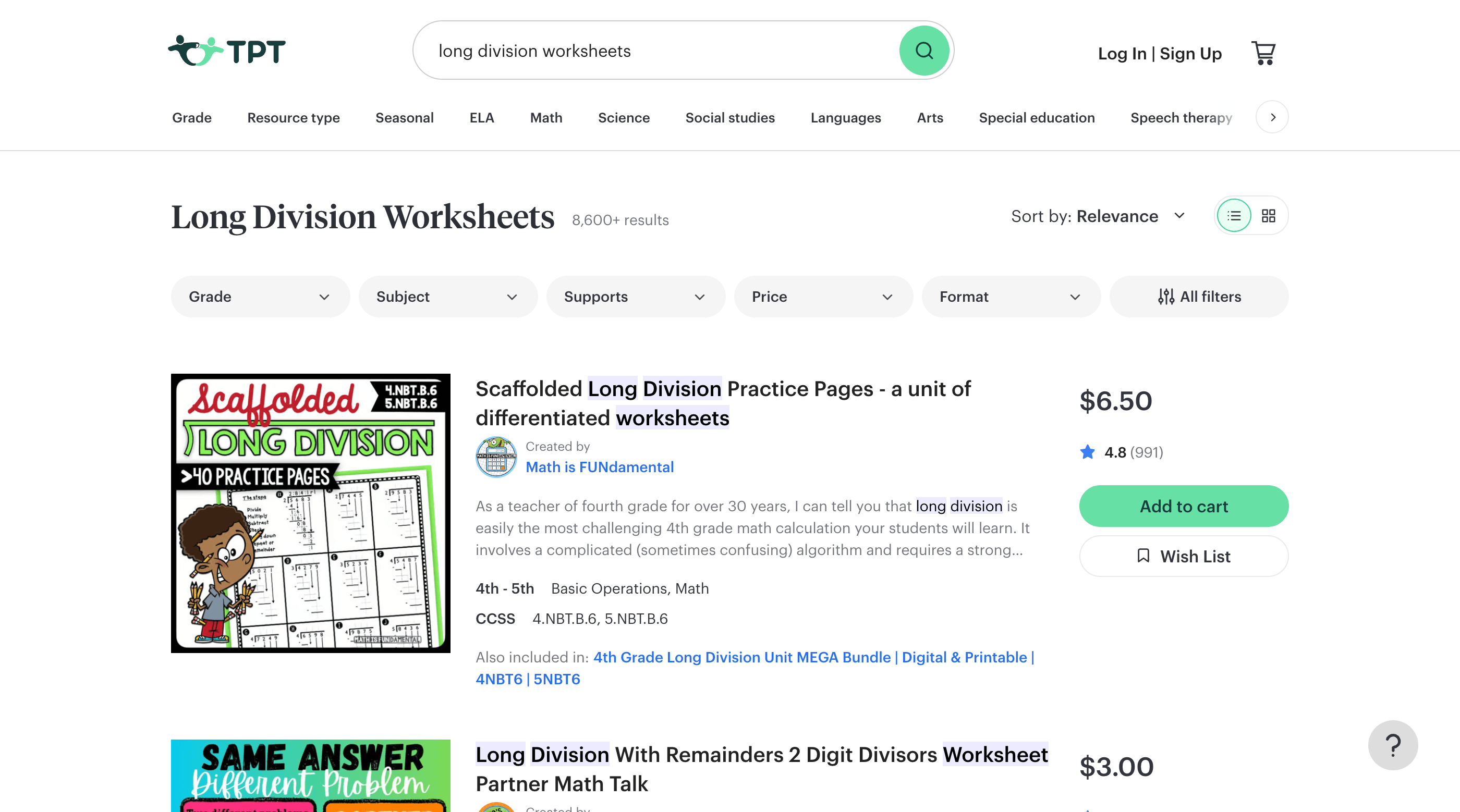
Teachers Pay Teachers is the largest marketplace for PreK-12 educational resources, powered by a community of educators creating materials for each other.
Key Design Patterns
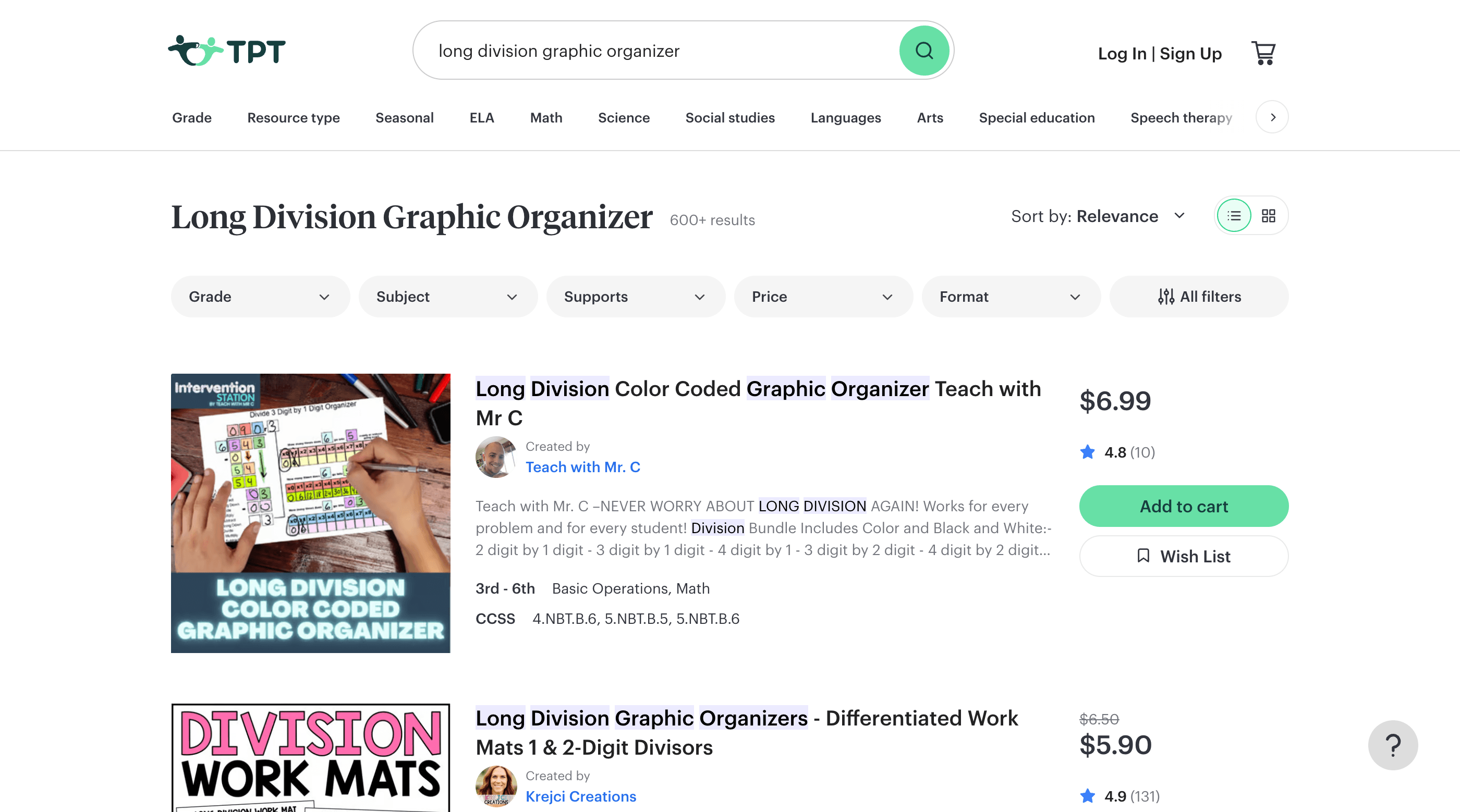
What TPT resources get right:
Color-coded scaffolding
Visual cues for each algorithm step
Differentiated versions
Same content, multiple support levels
Shaped templates
Boxes guide digit placement
Grid paper integration
Maintains place value alignment
Step-by-step prompts
"Divide, Multiply, Subtract, Bring Down"
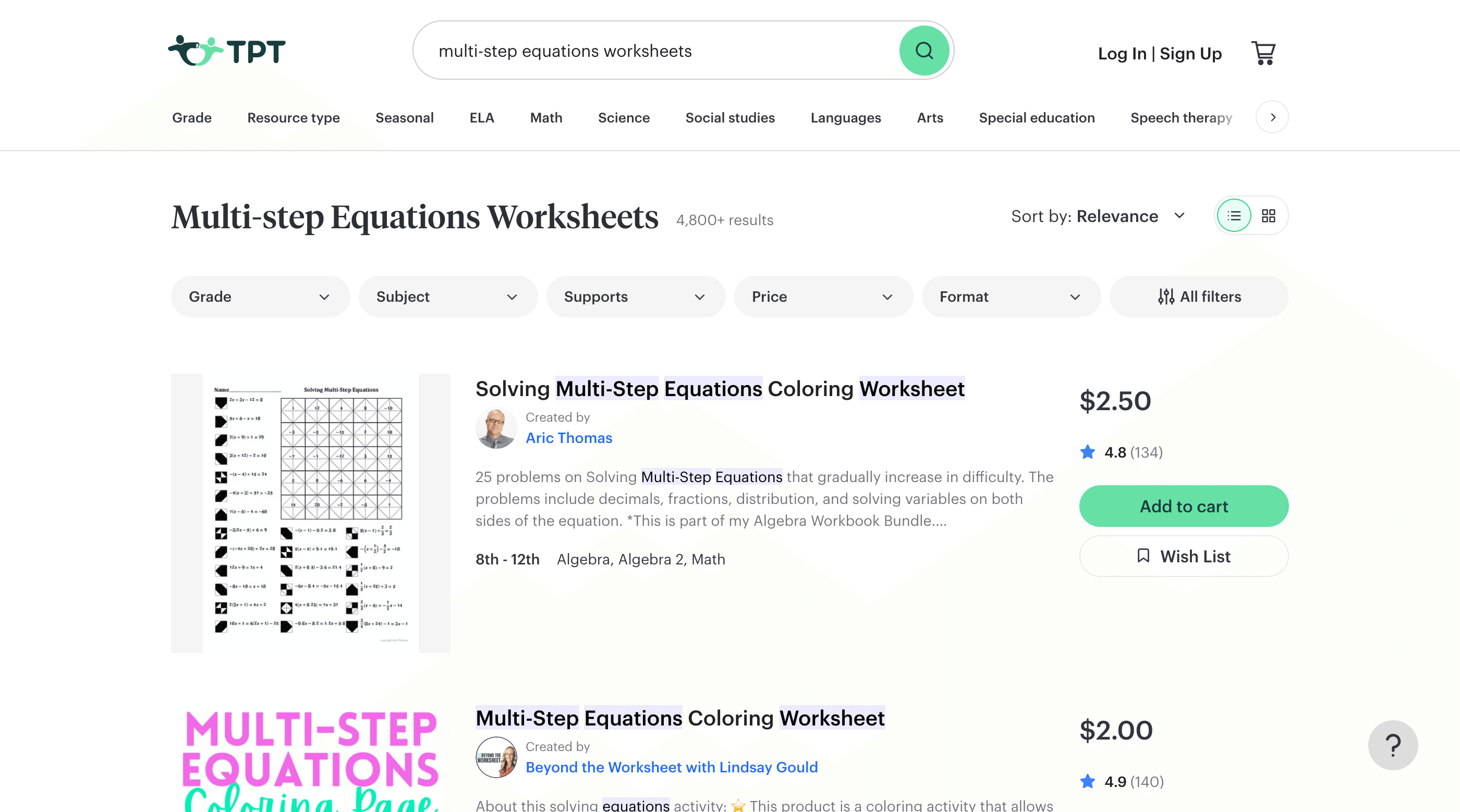
Key Insight
The most successful TPT resources offer 6 differentiation levels for the same skill: full color + full prompts, full color + partial prompts, grayscale + full prompts, grayscale + partial prompts, grid paper only, and blank workspace.
Procedural Fluency — Kuta Software
Best for: Algebra, multi-step equations, procedural practice
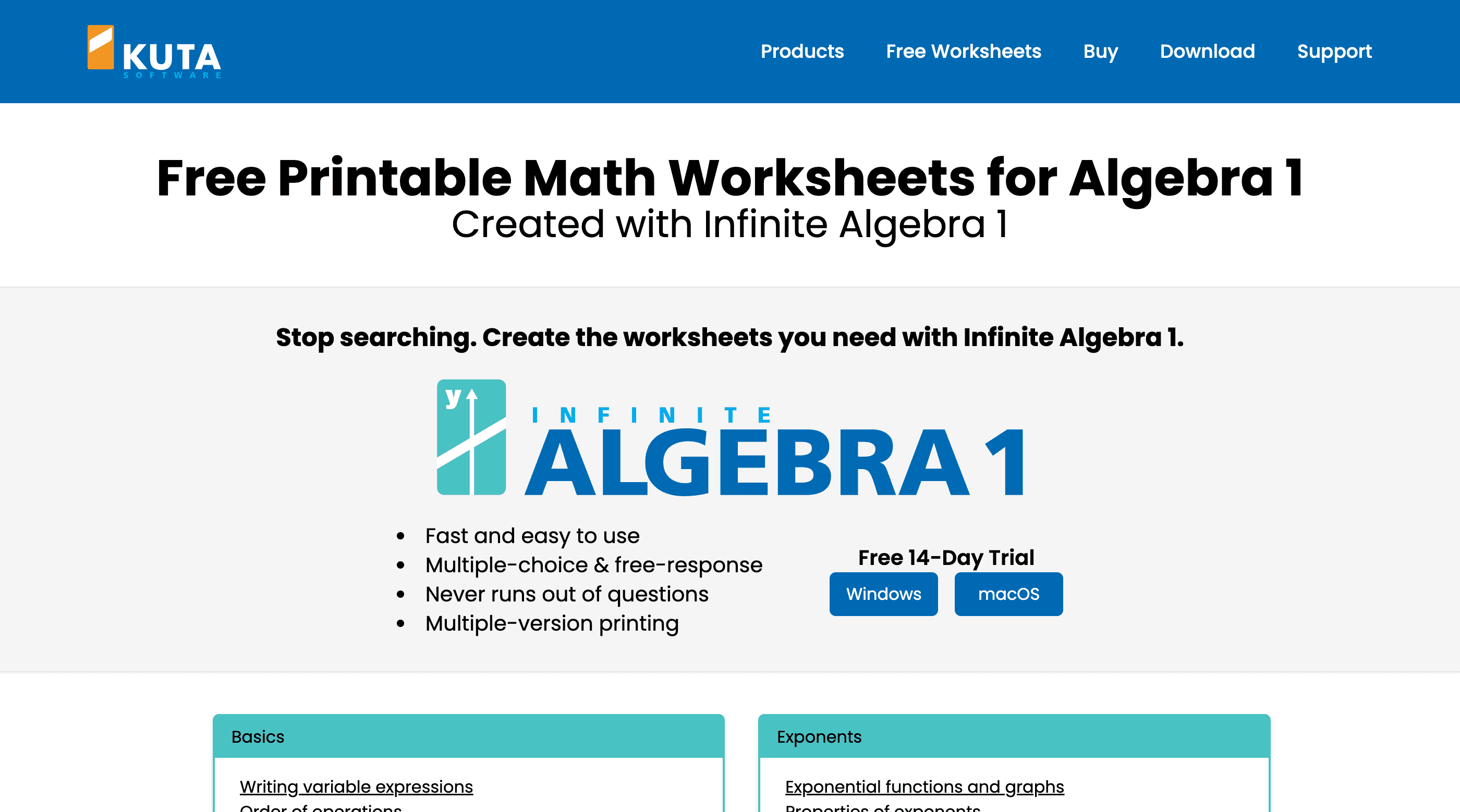
Kuta Software is the gold standard for procedural math practice worksheets. Teachers have used it for decades because it does one thing exceptionally well: generate unlimited practice problems with consistent formatting.
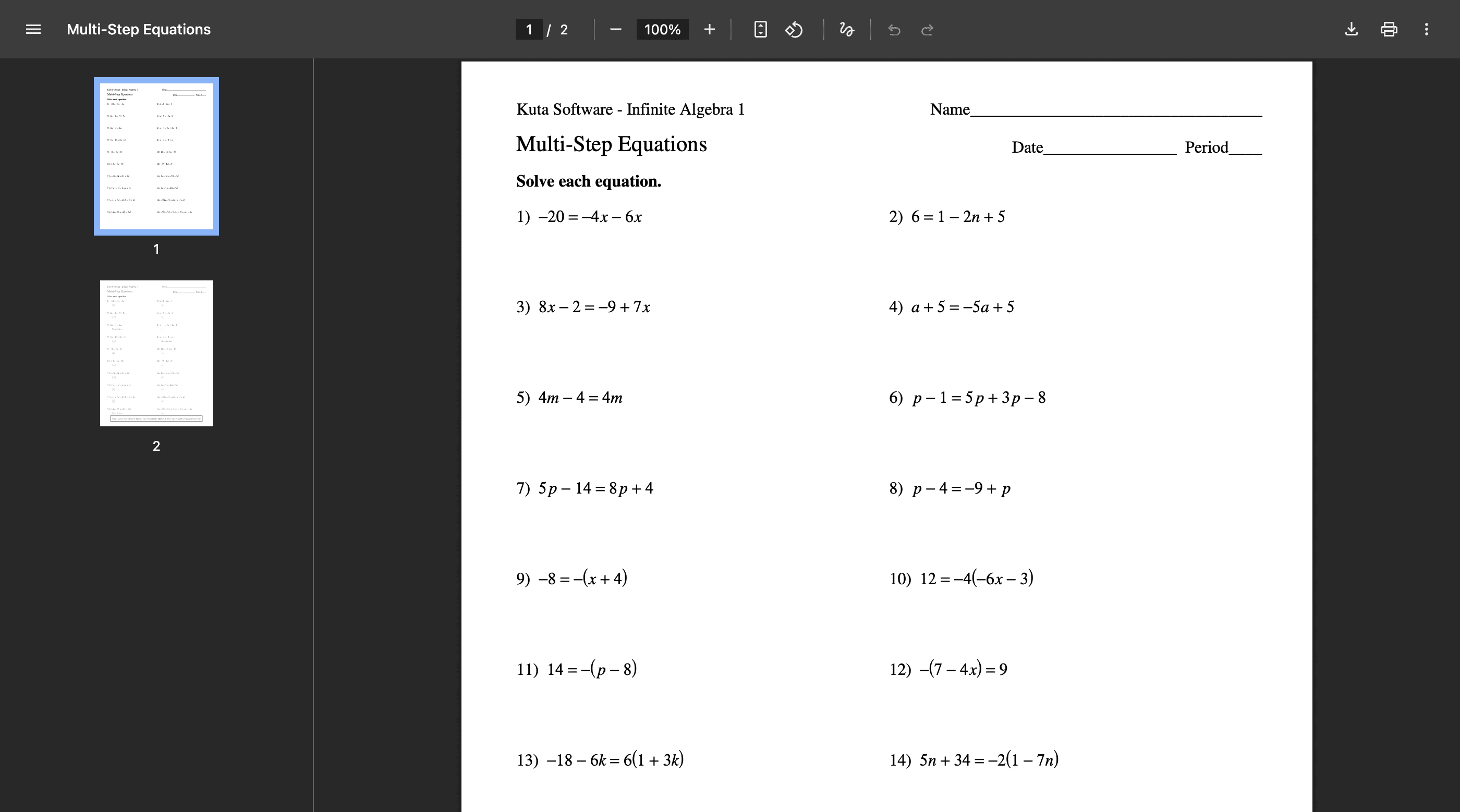
What Kuta gets right:
Numbered problems
Clear sequencing, easy to reference
Generous whitespace
Room to show work below each problem
Two-column layout
Efficient use of page space
Consistent difficulty
Problems grouped by type, not mixed
Answer keys included
Self-checking or teacher grading
Scaffolded Algorithms — Math-Drills
Best for: Long division, multi-digit multiplication, place value
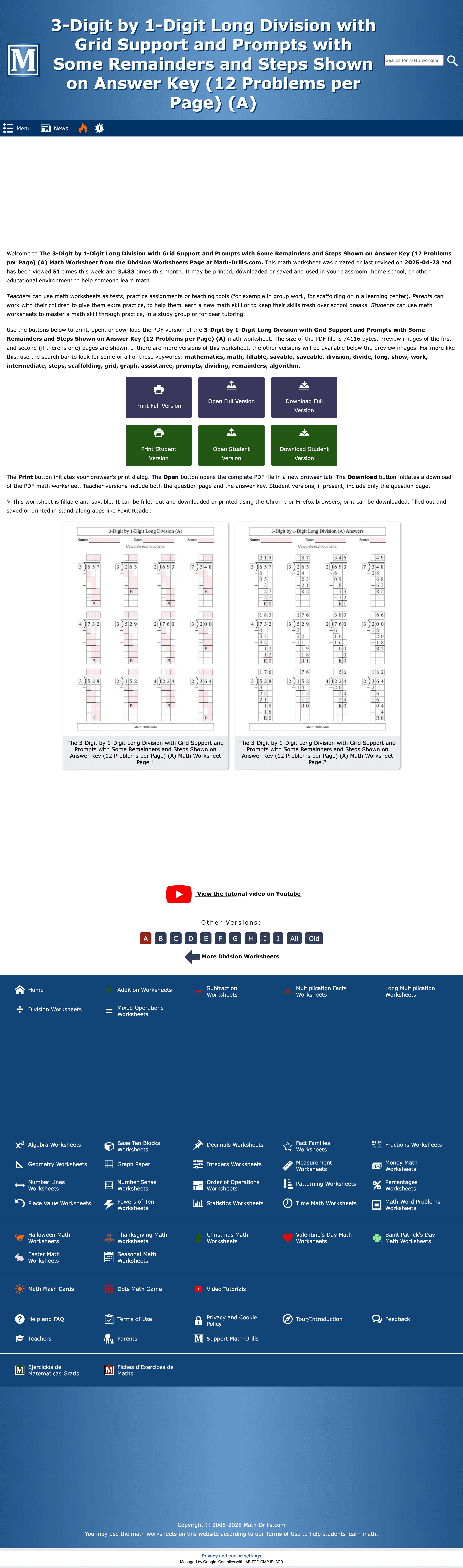
Math-Drills specializes in elementary arithmetic with structured scaffolding. Their grid-based worksheets are particularly valuable for students learning multi-step algorithms.
The Power of Grid Support
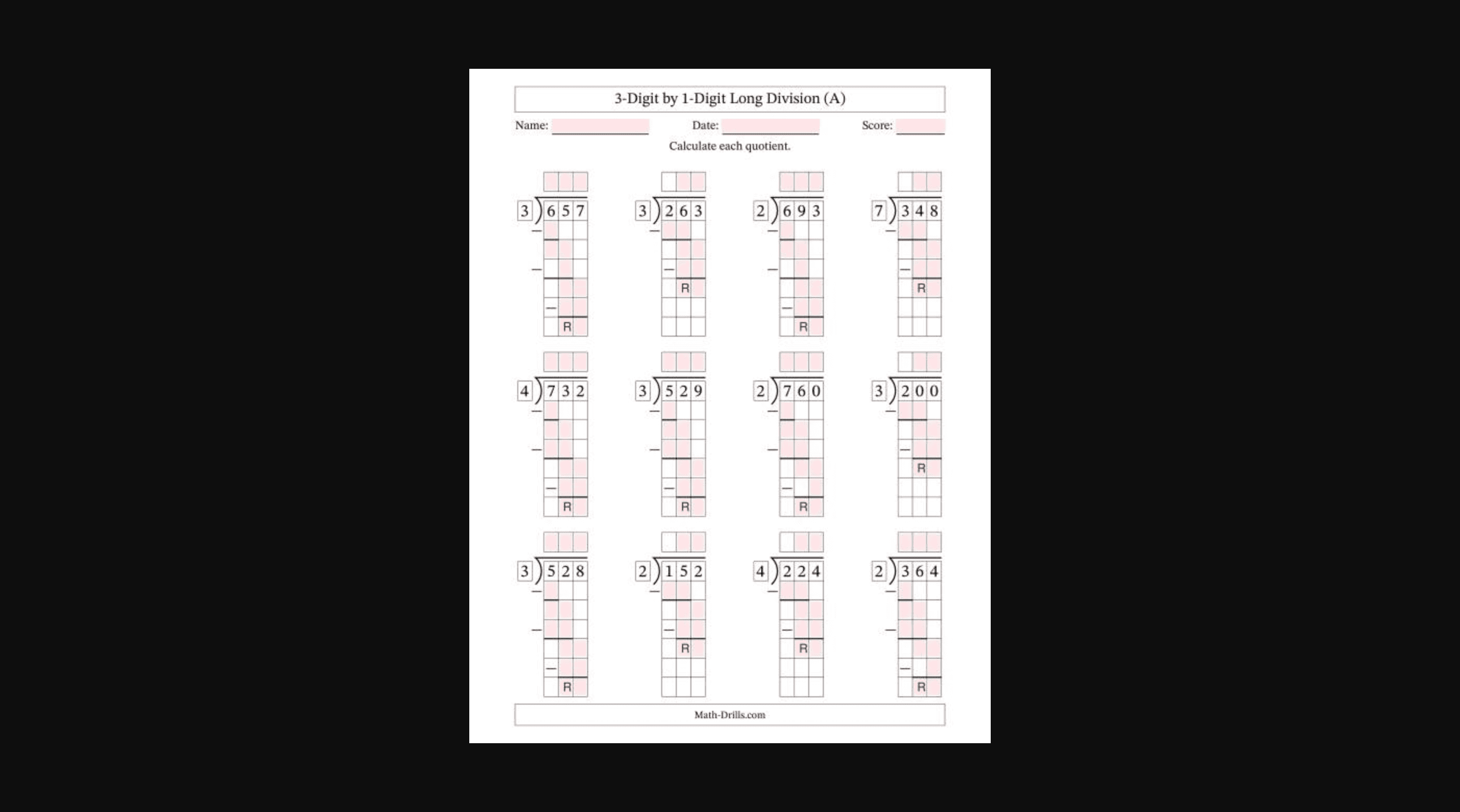
Why grids matter for algorithms:
- Place value alignment — Digits stay in correct columns
- Error reduction — Visual structure prevents common mistakes
- Scaffolded fading — Start with full grid support, remove gradually
- Self-correction — Students can trace their work step-by-step
Conceptual Understanding — Illustrative Mathematics
Best for: Problem-based learning, mathematical reasoning, real-world contexts
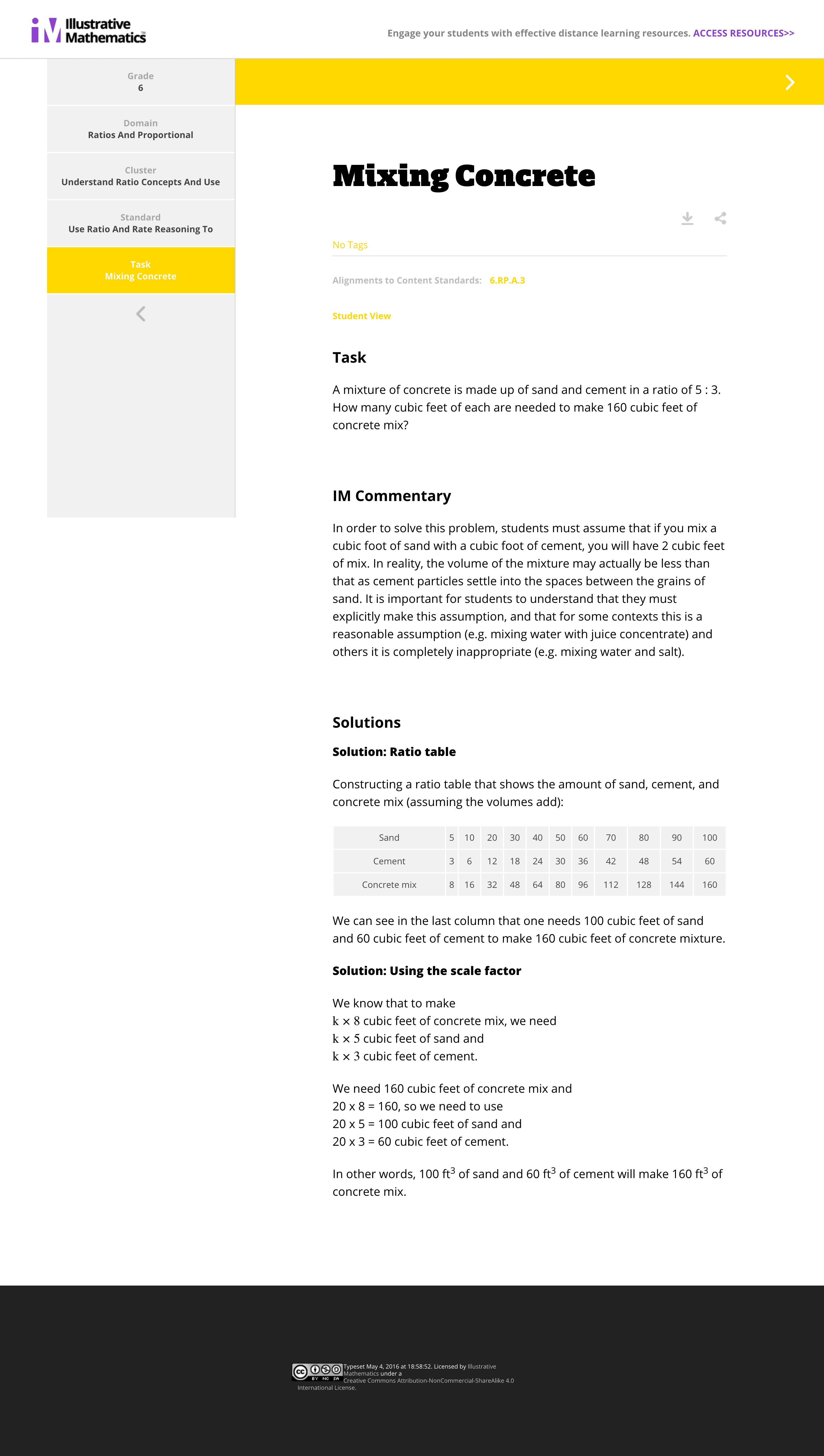
Illustrative Mathematics takes a fundamentally different approach: rich mathematical tasks rather than procedural drill.
What makes Illustrative tasks effective:
Real-world context
Ratio of sand to cement in concrete
Open-ended reasoning
Multiple solution paths accepted
Teacher commentary
Notes on assumptions and extensions
Multiple representations
Both ratio table AND scale factor approaches
Structured Curriculum — Eureka Math / EngageNY
Best for: Coherent lesson sequences, spiral review, homework helpers
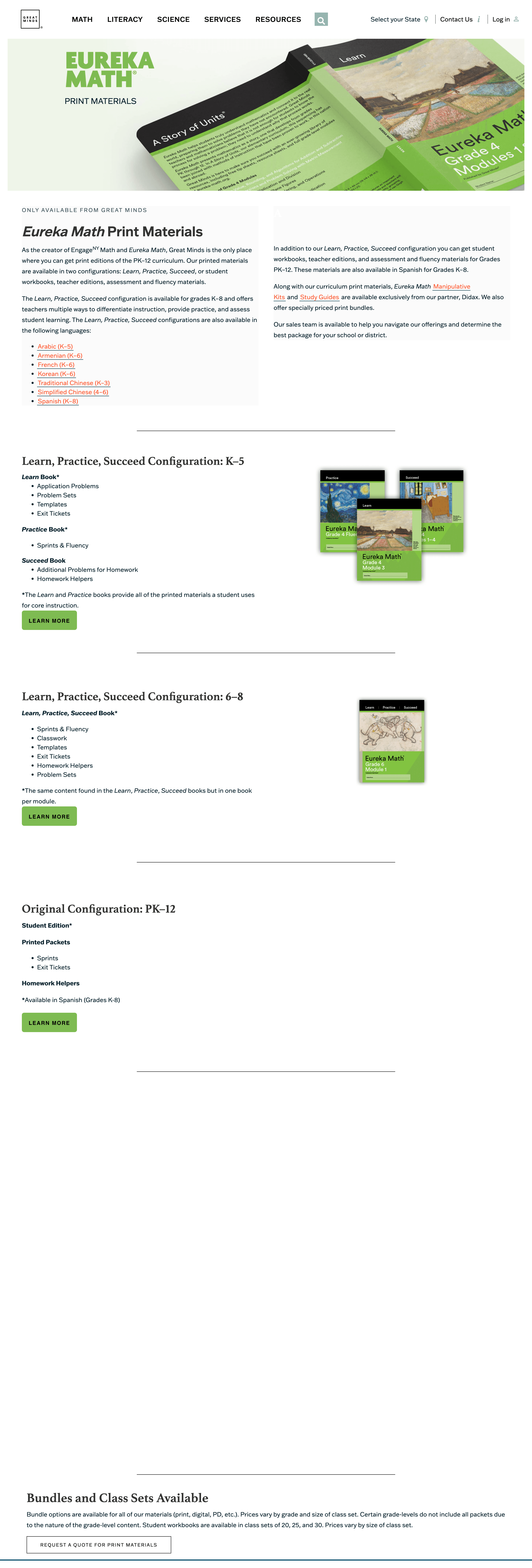
Eureka Math (formerly EngageNY Math) provides complete curriculum materials organized into a Learn, Practice, Succeed framework.
The LPS Framework:
Design Principles Across All Resources
Appropriate Whitespace
Every effective worksheet provides adequate space for showing work: 2-3 lines per procedural problem, full solution areas for word problems, and grid structures for alignment.
Progressive Scaffolding
Good worksheets fade support as students gain proficiency: full scaffold with prompts, partial scaffold, grid only, then blank workspace.
Clear Visual Hierarchy
Problems should be easy to scan and navigate: numbered problems, consistent spacing, section headers, and visual separation between question and work area.
Answer Key Options
Teachers need flexibility: full answer keys with intermediate steps, student versions without answers, and self-check formats with hidden/revealed answers.
Widget Priorities for PDF Generation
Based on this survey, our PDF widget system should prioritize:
| Priority | Widget | Use Case |
|---|---|---|
| High | Place value grid | Multi-digit arithmetic |
| High | Division scaffold | Long division with steps |
| High | Equation workspace | Multi-step algebra |
| High | Ratio table | Proportional reasoning |
| Medium | Coordinate grid | Graphing (already have) |
| Medium | Sprint template | Timed fluency practice |
| Medium | Tape diagram | Part-whole relationships |
| Medium | Worked example panel | Step-by-step solutions |
| Lower | Double number line | Ratio comparison |
| Lower | Balance scale | Equation solving visual |
Resources
Free Worksheet Sources
- Kuta Software — Algebra, geometry, calculus
- Math-Drills — K-8 arithmetic with scaffolding
- Illustrative Mathematics — Conceptual tasks
- K5 Learning — 10,000+ free worksheets K-6
- Math-Aids — Dynamically generated
Teacher Marketplaces
- Teachers Pay Teachers — Community resources
- Caffeine Queen Teacher — Scaffolded organizers
Curriculum Materials
- Open Up Resources — Free IM curriculum
- Eureka Math — K-12 curriculum
- EMBARC — Community Eureka resources